LED Studio · Articles
Articles on LED displays in Unity
Field notes from building LED Studio: how LED walls are rendered, moire, pixel pitch, stadium LED systems, an audio visualizer and the making of the arena film.
 November 11, 2026
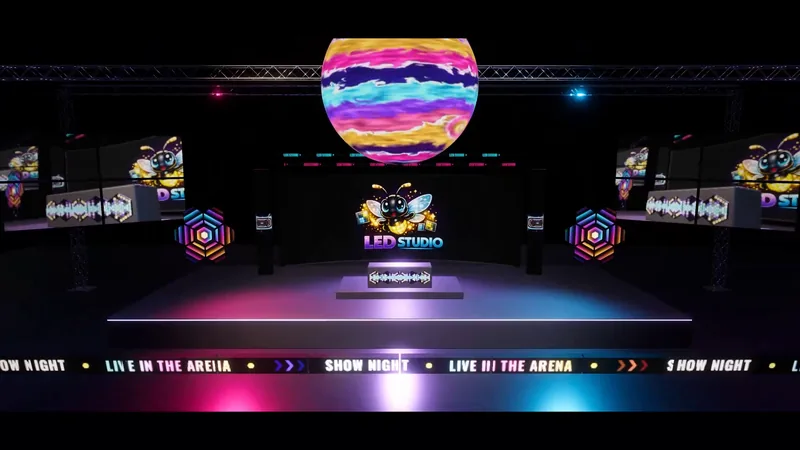
Making the arena film: more than 60 LED boards in one Unity scene
The Arena Showcase scene ships with LED Studio 1.7.0: a film of about 50 seconds through a concert and sports arena with 65 LED boards. Which features each shot uses, and how one show script and one camera director drive them.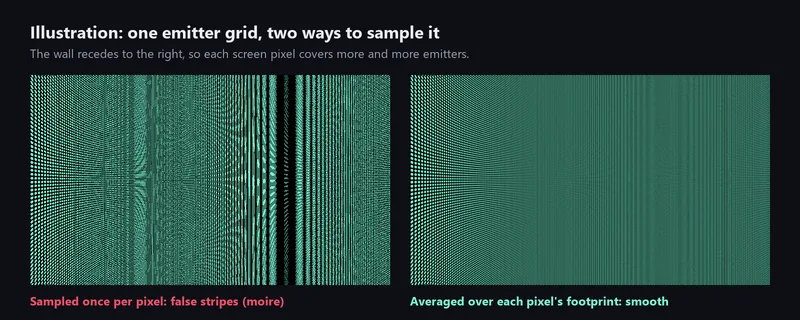 November 11, 2026
Moire on LED screens in Unity, and how to fix it
Moire is aliasing between a screen's emitter grid and the camera's pixel grid. Why it grows with distance and motion, the usual shader and camera fixes, and how LED Studio blends emitters into a smooth image without changing brightness.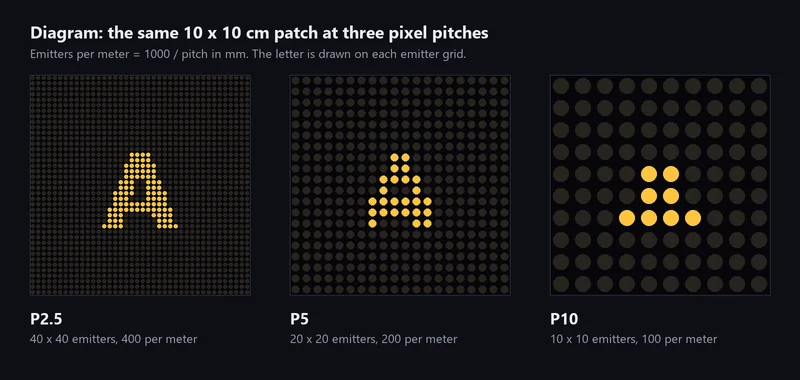 November 11, 2026
Pixel pitch for game developers
What P2.5, P3.9 and P10 mean, how to turn pitch into emitters per meter and cabinet resolutions, why vendors' viewing distance rules disagree, and how to size an emitter grid for a game camera.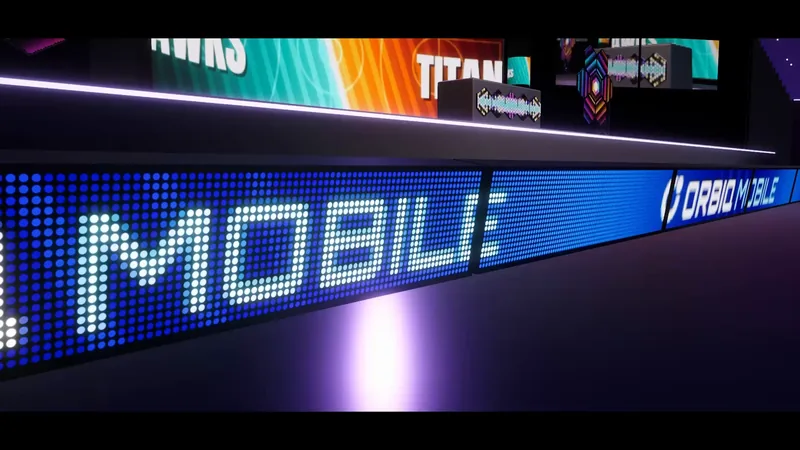 October 25, 2026
How stadium LED systems work, and how to build them for a game
A stadium is a system of LED displays with different jobs: center-hung videoboards, scoreboards, ribbon and fascia boards, perimeter and end-zone boards, concourse signs. What each one shows, typical pitches, and how to build each with LED Studio.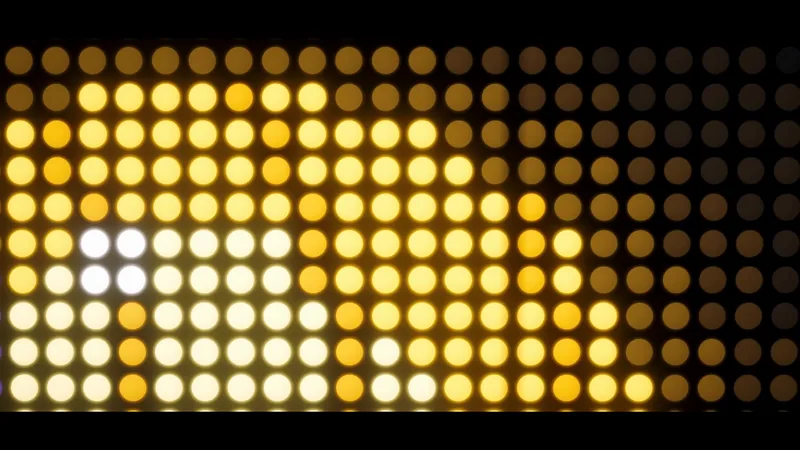 September 19, 2026
Build an LED audio visualizer in Unity
A spectrum analyzer is a natural LED board: lit bars on a dark grid. Read the spectrum with GetSpectrumData, draw bars into an emitter-sized texture and hand it to an LED Studio board, with a complete script, board settings and variations.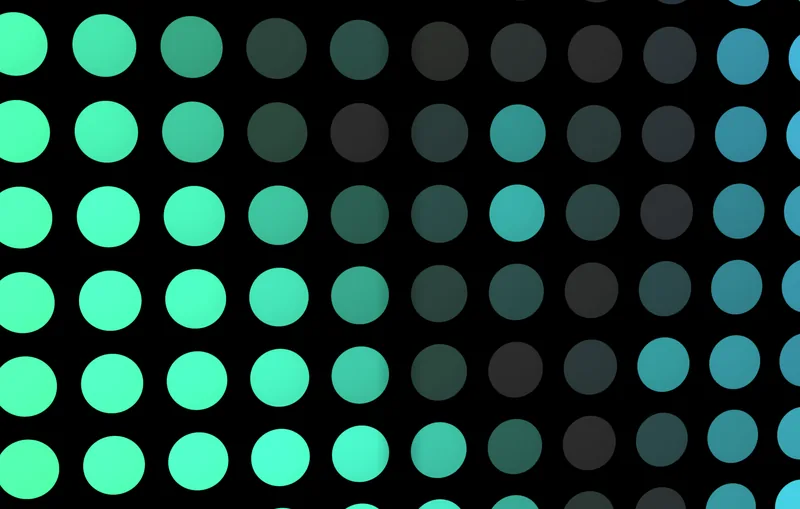 June 9, 2026
Building believable LED walls in Unity
The design decisions behind LED Studio: compose content into a logical board first, reconstruct emitters in the shader, give the renderer a physical scale through pitch, and keep defects, cabinets, panel groups and sync in their own layers.LED Studio